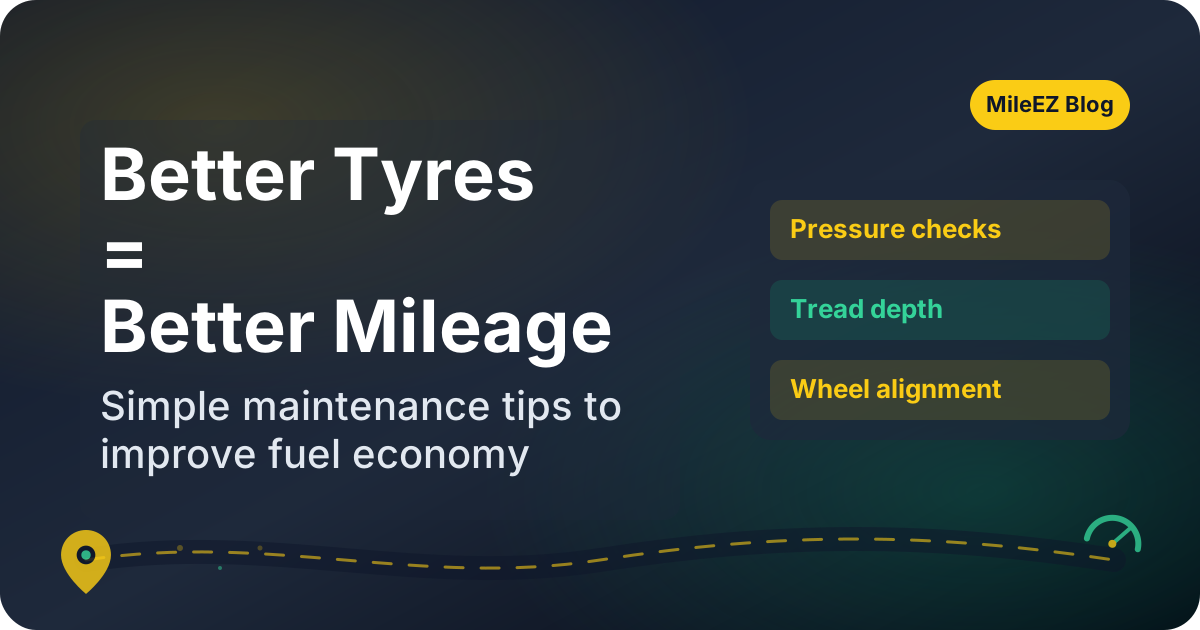
Tyre Maintenance Guide 2026: Boost Fuel Economy & Track True Mileage
Your tyres are the only part of your vehicle touching the road, yet they're often the most neglected component when it comes to maintenance. Proper tyre care doesn't just keep you safe — it directly impacts your fuel economy, reduces running costs, and ensures your mileage tracking is as accurate as possible.
Quick Summary
- Up to 3% fuel economy improvement — Properly inflated tyres reduce rolling resistance compared to under-inflated ones, according to US EPA estimates
- 20% longer tyre life — Regular maintenance prevents premature wear, potentially extending tyre lifespan significantly
- Monthly pressure checks — Industry standards recommend checking tyre pressure monthly when tyres are cold for optimal performance
Why Tyre Maintenance Matters for Mileage
Under-inflated tyres increase rolling resistance, forcing your engine to work harder and consume more fuel. This doesn't just cost you money at the pump — it also affects the accuracy of your mileage calculations when claiming business expenses or monitoring lease agreements.
Under-inflated tyres sag slightly, shrinking their effective rolling diameter. A smaller tyre rotates more times to cover the same distance, which means your vehicle's mechanical odometer can actually over-report your mileage — making it look like you've driven more kilometres or miles than you truly have. For business drivers claiming mileage deductions or monitoring a lease, this kind of mechanical inaccuracy is worth understanding. GPS-based tracking, by contrast, measures true distance on the ground regardless of what's happening at wheel level.
Essential Tyre Maintenance Tasks
Check Tyre Pressure Monthly
Tyre pressure should be checked monthly when tyres are cold (before you've driven more than a mile or two). Use the specifications found on the placard inside the driver's door frame, not the maximum limit stamped on the tyre sidewall itself.
Under-inflated tyres don't just waste fuel — they also create more heat, leading to premature wear and potential blowouts. Over-inflated tyres can reduce traction and cause uneven wear patterns, particularly in the centre of the tyre.
Inspect Tyre Tread and Condition
Regular visual inspections help catch problems early. Look for uneven wear patterns, which often indicate alignment issues, improper inflation, or suspension problems. A quick pocket-change test can give you an instant read on tread depth — see the regional table below for the right coin to use.
| Country | Legal Minimum Tread | Recommended Change | The Pocket-Change Test |
|---|---|---|---|
| United Kingdom | 1.6 mm | 3.0 mm (wet weather) | 20p test: Insert a 20p coin into the groove. If the outer band is visible, tread is under 3mm |
| United States | 2/32 inch (~1.6 mm) | 4/32 inch | Penny test: Insert a penny upside down. If the top of Lincoln's head is visible, you're below 2/32" |
| Canada | 1.6 mm (2/32") | 2.0–3.0 mm | Quarter test: Insert a 25¢ coin nose-first. If tread doesn't cover the caribou's nose, it's time to replace |
Wheel alignment affects tyre wear patterns and can impact fuel efficiency. If you notice your vehicle pulling to one side or uneven tyre wear, have your alignment checked professionally.
Rotate Tyres Regularly
Regular tyre rotation helps ensure even wear and extends tyre life. Most manufacturers recommend rotation every 5,000 to 8,000 miles (approx. 8,000 to 13,000 km), though this varies by vehicle type and driving conditions. Front tyres typically wear faster than rear tyres due to steering and braking forces.
Regional Considerations
United Kingdom
UK drivers face unique challenges with variable weather conditions and extensive motorway networks. The legal minimum tread depth is 1.6mm across the central three-quarters of the tyre width. However, many experts recommend replacing tyres at 3mm for optimal wet weather performance.
UK fuel duty means every efficiency gain is amplified at the pump. With petrol and diesel prices consistently among the highest in Europe, proper tyre maintenance becomes even more financially important.
United States
Different states have varying requirements for tyre condition, but the 2/32-inch tread depth rule is standard across most jurisdictions. Given the vast distances many Americans drive, small percentage improvements in fuel economy can translate to significant annual savings.
Many US drivers benefit from seasonal tyre changes in northern states, switching between summer and winter tyres as conditions change.
Canada
Canadian drivers face some of the most challenging conditions globally, from extreme cold to summer heat. Cold temperatures naturally reduce tyre pressure, making regular checks even more critical during winter months.
Some Canadian provinces mandate winter tyres during certain periods, requiring drivers to maintain two sets of tyres and track their rotation and replacement schedules.
Technology and Tyre Efficiency
Low Rolling Resistance Tyres
Low rolling resistance tyres may improve fuel economy by 1-4% according to various tyre manufacturer claims, though real-world results can vary based on driving conditions and vehicle type. These tyres are designed to reduce the energy lost as the tyre flexes during rotation.
While the upfront cost is typically higher, the fuel savings over the tyre's lifetime often offset the initial investment for high-mileage drivers.
Nitrogen vs Air Inflation
Nitrogen-filled tyres maintain pressure longer than air-filled tyres according to some automotive service recommendations. This is because nitrogen molecules are larger than oxygen molecules, reducing the rate of pressure loss through the tyre walls.
However, the benefits are modest for most drivers, and regular pressure checks remain essential regardless of inflation medium.
Tracking Your Tyre Investment
Proper tyre maintenance is an investment that pays dividends in multiple ways. Enhanced fuel economy reduces your per-mile costs, while extended tyre life spreads the replacement cost over more miles.
For business drivers, maintaining detailed records of tyre maintenance costs can support tax deductions. MileEZ features automatic trip detection that helps you track exactly how many miles you're getting from each set of tyres, making it easier to calculate true running costs and plan replacements.
Common Tyre Maintenance Mistakes
Many drivers check tyre pressure only when tyres look flat, but visual inspection isn't reliable — tyres can be significantly under-inflated while still appearing normal. Others rely solely on tyre pressure monitoring systems (TPMS), which typically only warn when pressure drops 25% or more below recommended levels.
Using different tyre brands or models on the same axle can create handling imbalances and uneven wear patterns. Always replace tyres in pairs on the same axle, and ideally use identical tyres across all four positions.
Track Every Journey with MileEZ
Your tyres work hard to keep you moving efficiently, and MileEZ ensures you capture every single journey they help you take. With automatic drive detection and precise GPS tracking, you'll know exactly how your tyre maintenance efforts pay off in consistent, true performance data. Whether you're tracking business mileage for tax purposes in the UK, US, or Canada, or simply keeping your vehicle lease limits in check, MileEZ removes the guesswork.
See how much you could save on your next tax return with our free mileage calculator, and start maximising both your tyre lifespan and your tracking accuracy.